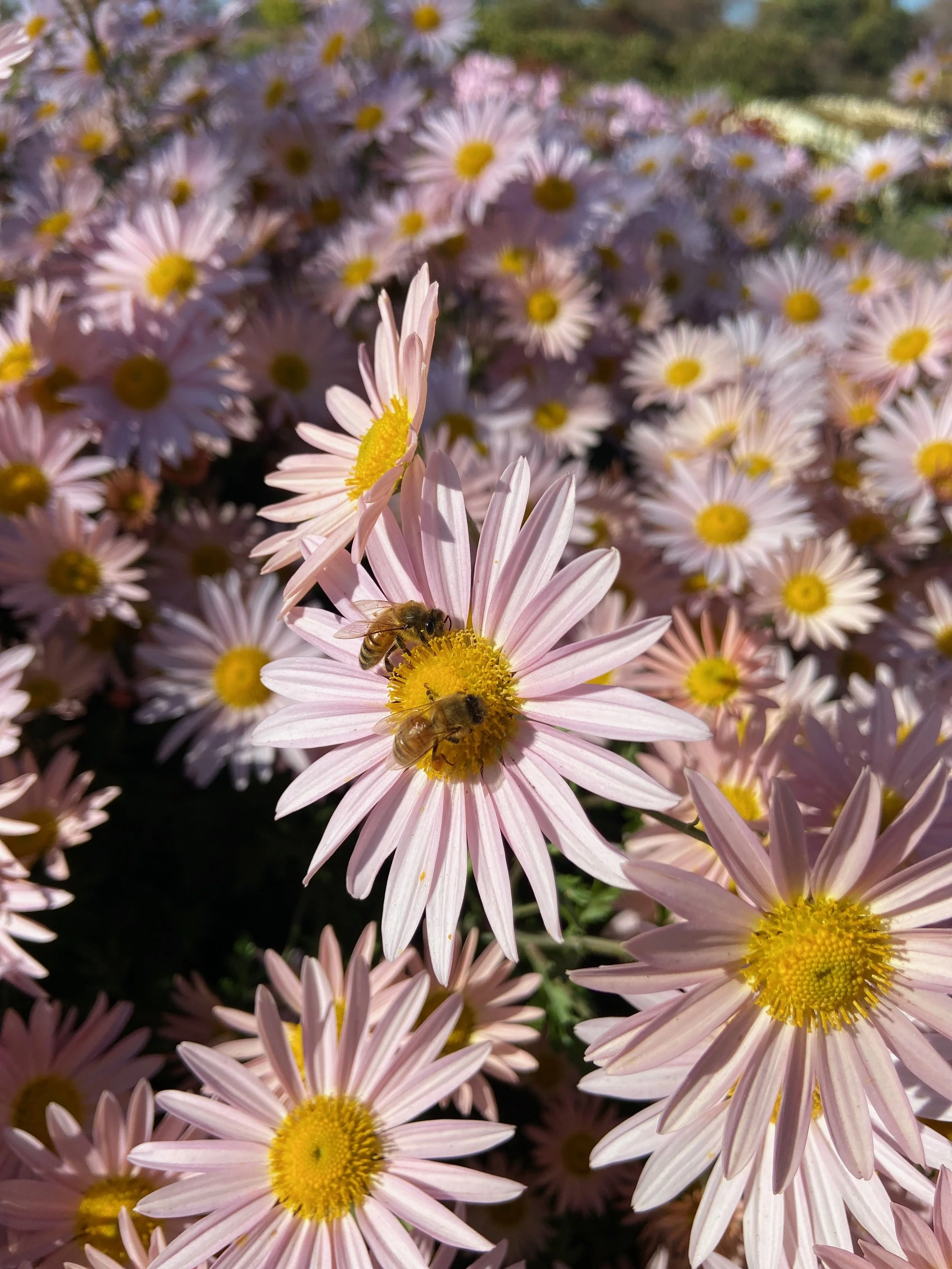
I integrate field research and molecular genetics to understand the ecological processes that generate evolutionary change in plant populations and inform conservation practices.
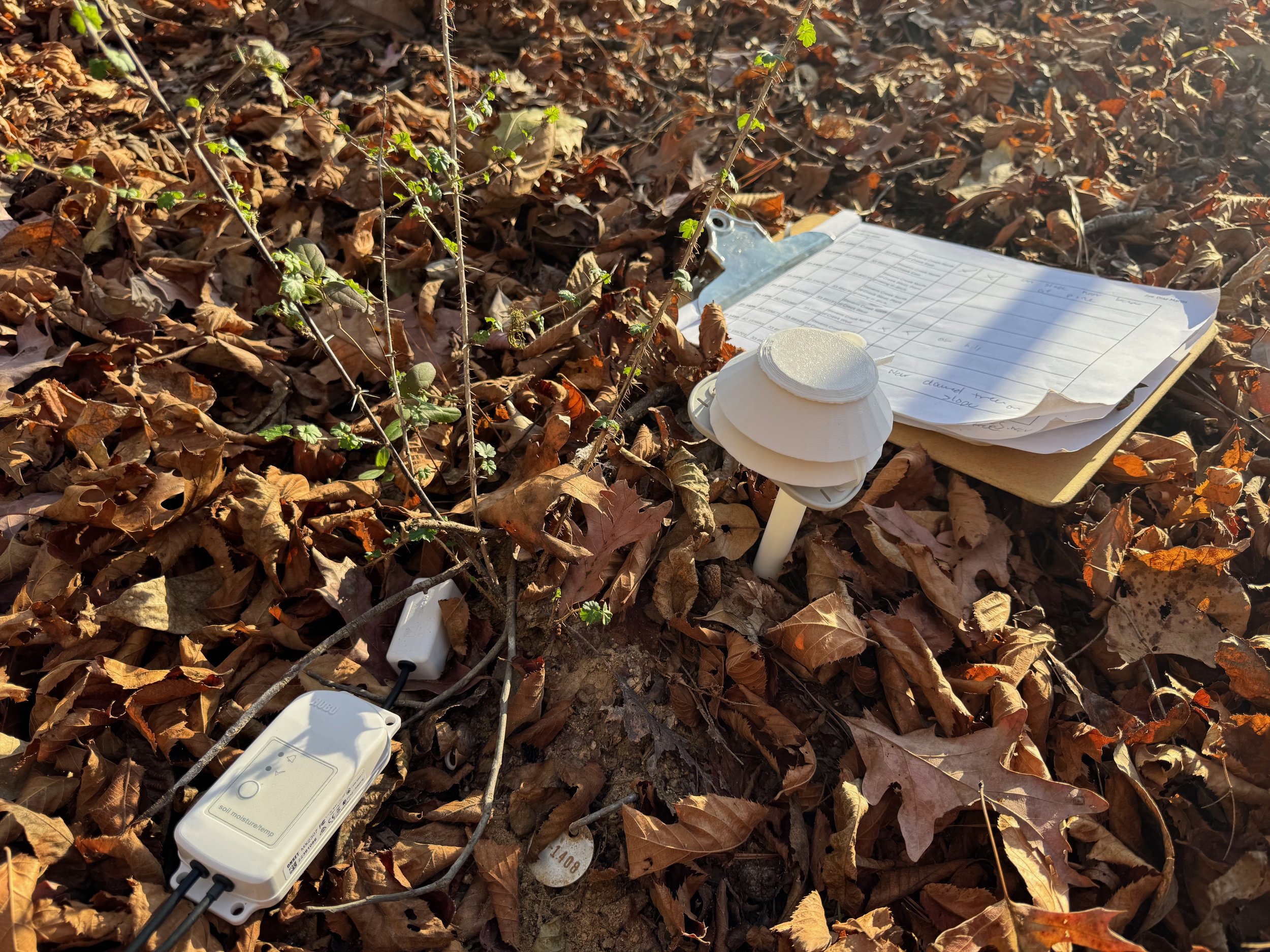
Setting up data loggers to collect fine-scale variation in climate and environment for Ribes echinellum, a threatened gooseberry native to the SE US. Project partner: Atlanta Botanical Garden
RESEARCH OVERVIEW
My research uses conservation genetics and genomics to understand how ecological context, reproductive processes, and management decisions shape genetic diversity in plants. I study rare and threatened species in their natural habitats to evaluate how fine-scale environmental variation, dispersal, and regeneration influence gene flow, inbreeding, and adaptive potential, and I apply similar genetic tools to assess how ex situ cultivation, breeding, and production practices preserve or erode genetic diversity outside the wild. Complementing this work, my research on pollen dispersal examines how plant density, pollinator behavior, and reproductive strategy interact across spatial scales to shape pollen-mediated gene flow, linking ecological processes with long-term evolutionary outcomes relevant to conservation and restoration.
LINKS TO Research topics BELOW:
- IN SITU CONSERVATION
- eX SITU CONSERVATION
- POLLEN DISPERSAL
IN SITU CONSERVATION
In situ conservation refers to protecting and studying species in the places where they naturally live. In conservation genetics, this involves using DNA-based tools to understand how genetic diversity, gene flow, and reproduction are structured within and among natural populations. These insights help identify populations at risk, reveal how habitat change or ecological disruption affects long-term survival, and guide management actions that support healthy, resilient populations in their native environments.
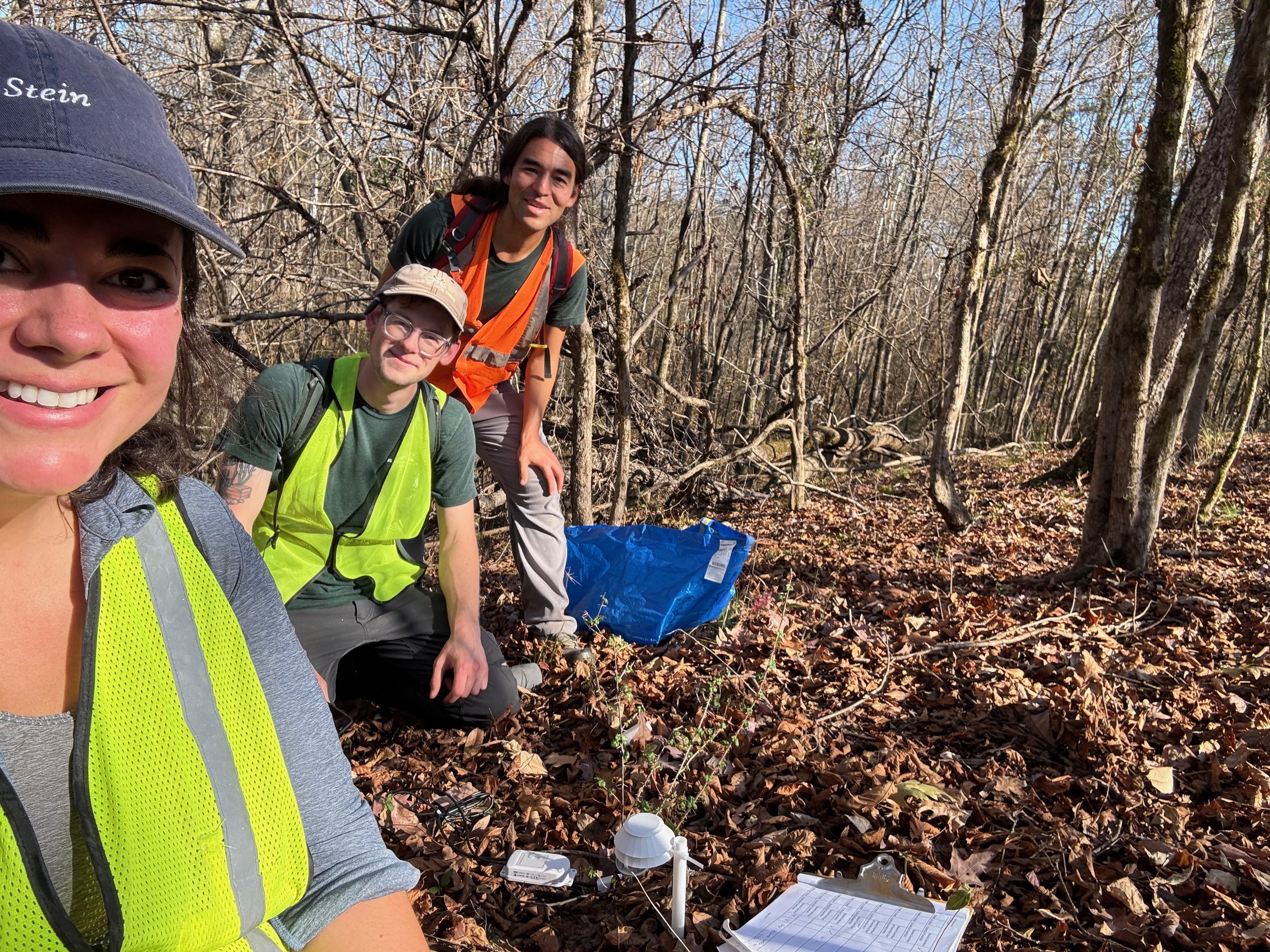
Collecting environmental data for wild populations of Ribes echinellum with the team from the Atlanta Botanical Garden in SC
Complementing this work, my research has examined how landscape-scale anthropogenic change alters genetic diversity and dispersal processes in tropical plant species. Prior projects in Ecuador investigated how forest loss and defaunation influence pollen and seed-mediated gene flow in animal-dispersed palms. These studies demonstrate that reductions in forest cover at broad spatial scales can significantly decrease effective population size and genetic diversity, while changes in wildlife communities can alter fine-scale spatial genetic structure even in species previously assumed to be resilient due to small seed size or flexible dispersal strategies. Together, this body of work highlights the importance of spatial scale, dispersal ecology, and demographic processes in shaping genetic outcomes, and provides conservation-relevant insights for managing plant populations facing habitat loss, altered species interactions, and limited regeneration.
My in situ conservation research uses population genetic and genomic approaches to understand how ecological and evolutionary processes shape genetic diversity in rare and threatened plant species, particularly across fine spatial scales. A central focus of my current work is the federally threatened Miccosukee gooseberry (Ribes echinellum), a clonal shrub restricted to two small populations in the southeastern United States. Using genome-wide SNP data, we examine how historical connectivity, contemporary reproduction, and local environmental conditions interact to influence patterns of gene flow, clonality, and adaptive potential. Although these populations retain moderate genetic diversity and show little evidence of inbreeding, contemporary regeneration is extremely limited and occurs largely through clonal growth, raising concerns about long-term evolutionary resilience despite short-term genetic stability. This project is being conducted in collaboration with the Atlanta Botanical Garden.
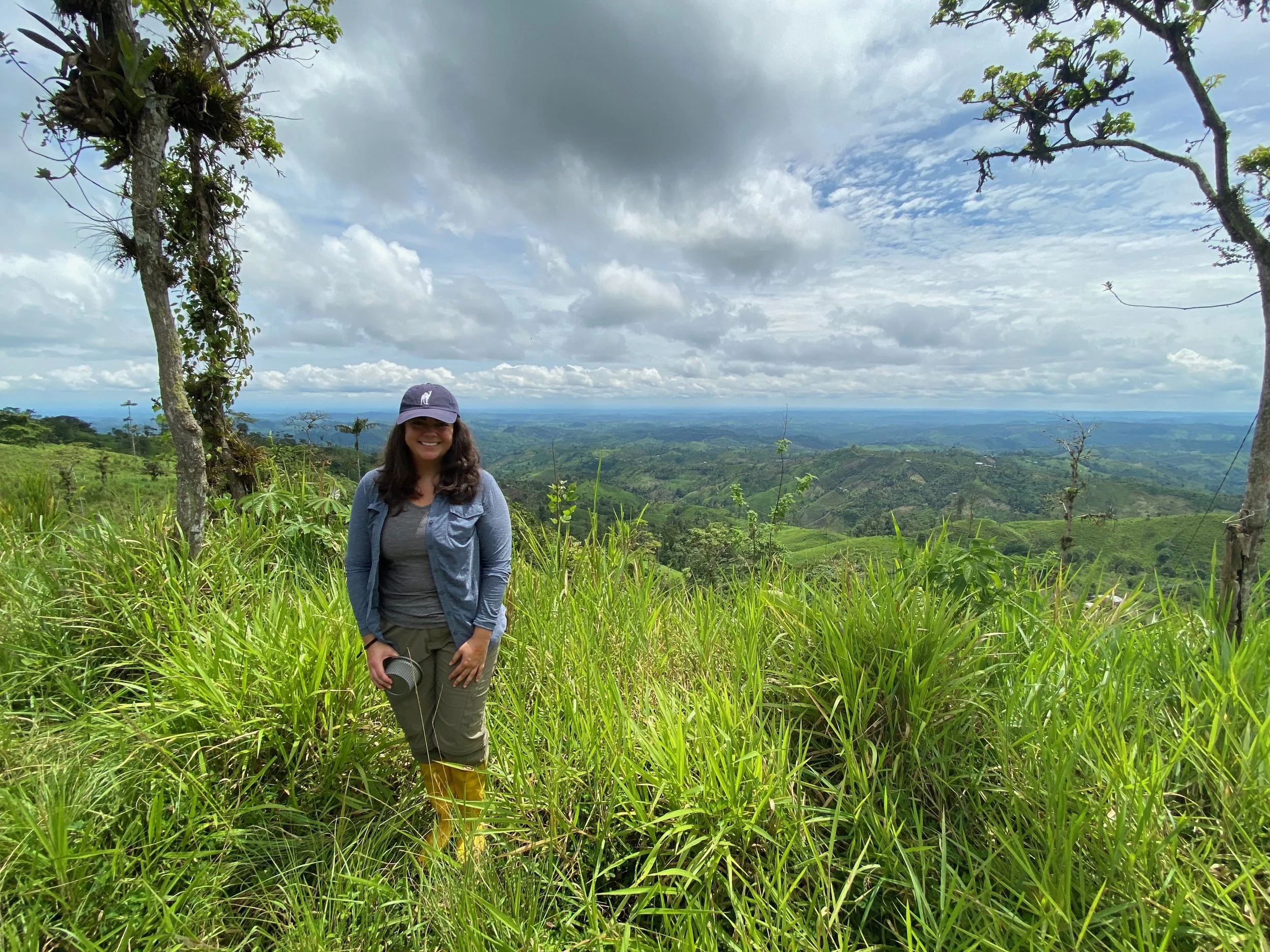
Highly impacted tropical forest landscape in NW Ecuador
Related publications:
Diaz-Martin Z, King P, Stockert J, Eserman-Campbell L, Coffey E, Xingwen L. Between- and within-population genetic dynamics reveal conservation challenges for the rare plant Ribes echinellum. Conservation Genetics. Manuscript submitted.
Lamperty T, Diaz-Martin Z, Swamy V, Karubian J, Choo J, Dunham A. (2024). Defaunation Increases Clustering and Fine-Scale Spatial Genetic Structure in a Small-Seeded Palm Despite Remaining Small-Bodied Frugivores. Molecular Ecology. 0:e17620 https://doi.org/10.1111/mec.17620. PDF
Diaz-Martin Z, Karubian J. (2021). Forest cover at landscape scales increases male and female gametic diversity of palm seedlings. Molecular Ecology. 30:4353–4367. PDF
EX SITU CONSERVATION
Ex situ conservation involves conserving species outside of their natural habitats, such as in seed banks, botanical gardens, greenhouses, or managed breeding programs. Conservation genetics is used in ex situ conservation to guide the collection, storage, and propagation of individuals in ways that capture and maintain genetic diversity. By understanding how genetic variation is distributed across populations, genetic tools help ensure that ex situ collections represent the full range of diversity found in the wild and can support future restoration, reintroduction, or reinforcement efforts.
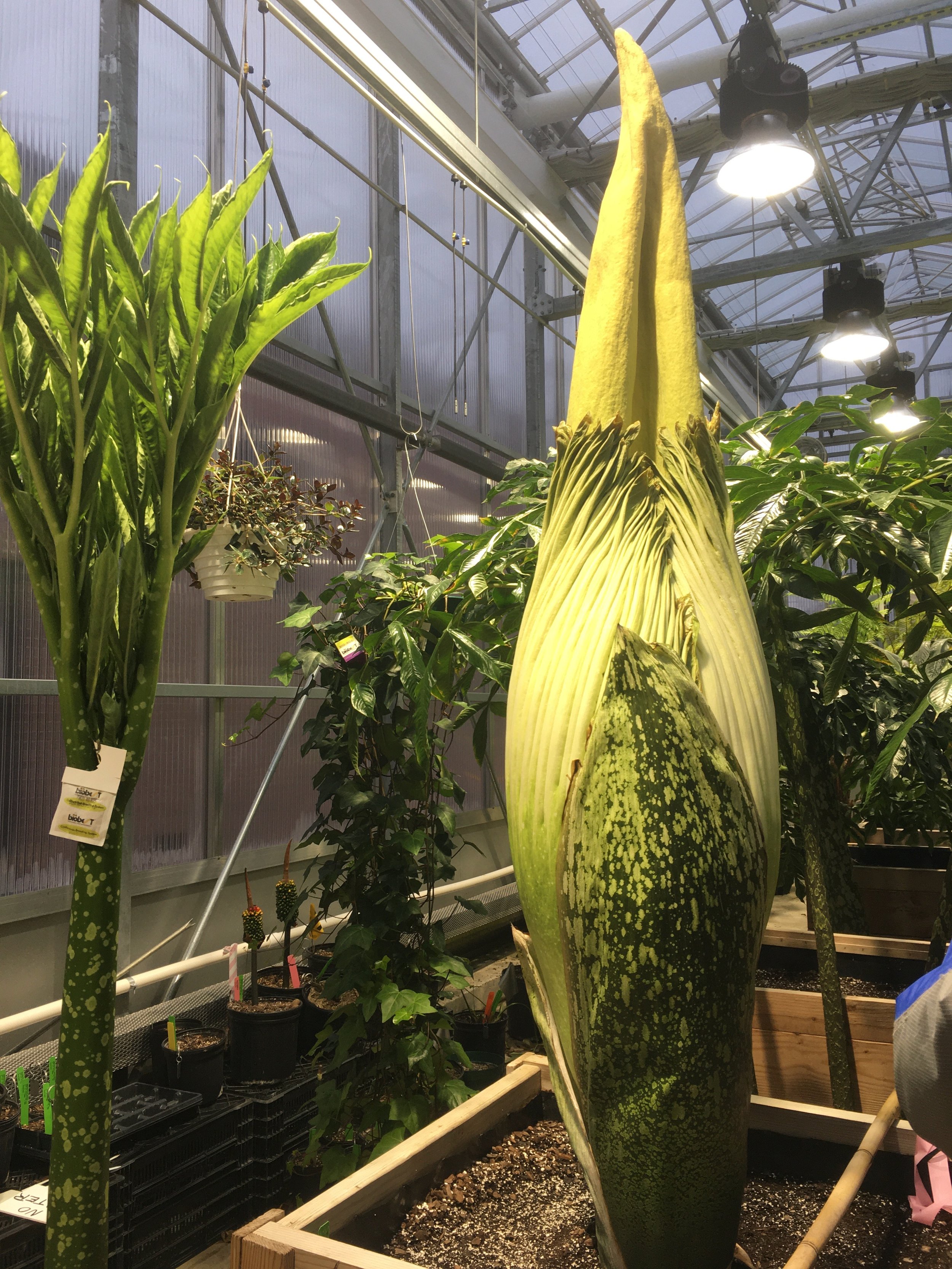
Cultivated plants of the corpse flower, Amorphophallus titanum, a species that primarily exists in botanic garden collections.
My ex situ conservation research applies conservation genetics to evaluate how well cultivation, breeding, and plant production practices preserve genetic diversity outside of natural habitats. Through studies of endangered and exceptional plant species held in botanical gardens and managed collections, my work examines whether ex situ populations adequately capture wild genetic diversity, how that diversity is maintained across generations, and how management decisions influence inbreeding and relatedness. Using genetic data and pedigree-based approaches, I identify gaps in current practices, including limited founder representation, uncoordinated breeding, incomplete records, and production protocols that unintentionally reduce genetic diversity. Collectively, this work highlights the importance of genetic monitoring, coordinated management among institutions, and evolutionarily informed propagation strategies to ensure ex situ collections retain the diversity needed to support long-term conservation, restoration, and reintroduction efforts. This work was conducted in collaboration with researchers at the Chicago Botanic Garden and the Montgomery Botanical Center.
Related publications:
Murrell OG, Diaz-Martin Z, Havens K, Hughes M, Meyer A, and JB Fant. Using pedigree tracking of the ex situ metacollection of Amorphophallus titanum (Araceae) to identify challenges to maintaining genetic diversity in the botanical community. Annals of Botany. DOI:https://doi.org/10.1093/aob/mcaf038.
Diaz-Martin Z, De Vitis M, Havens K, Kramer AT, MacKechnie LM, Fant J. (2023). Species-specific effects of production practices on genetic diversity in plant reintroduction programs. Evolutionary Applications. 6(12):1956-1968. doi: 10.1111/eva.13614. PDF
Diaz-Martin Z, Fant JB, Havens K, Cinea W, Tucker Lima JM, Griffith MP. (2023). Current management practices do not adequately safeguard endangered plant species in conservation collections. Biological Conservation. 280 (109955). PDF
POLLEN DISPERSAL DYNAMICS
My research on pollen dispersal examines how reproductive strategy, pollinator behavior, and plant spatial structure interact to shape patterns of gene flow and genetic diversity. Using population genetic and genomic approaches, I study how pollen movement varies across spatial scales and among closely related taxa with different mating systems. This work shows that local plant density can strongly influence pollen dispersal distance and offspring genetic diversity, while broader landscape context can have opposite effects, highlighting the importance of scale in understanding pollination dynamics. In comparative studies of related plant species, my research demonstrates that differences in reproductive strategy contribute to evolutionary divergence and interact with geography and pollinator reliability to shape genetic diversity within populations. Together, these studies provide insight into how pollen-mediated gene flow influences both short-term population processes and longer-term evolutionary patterns in plants.
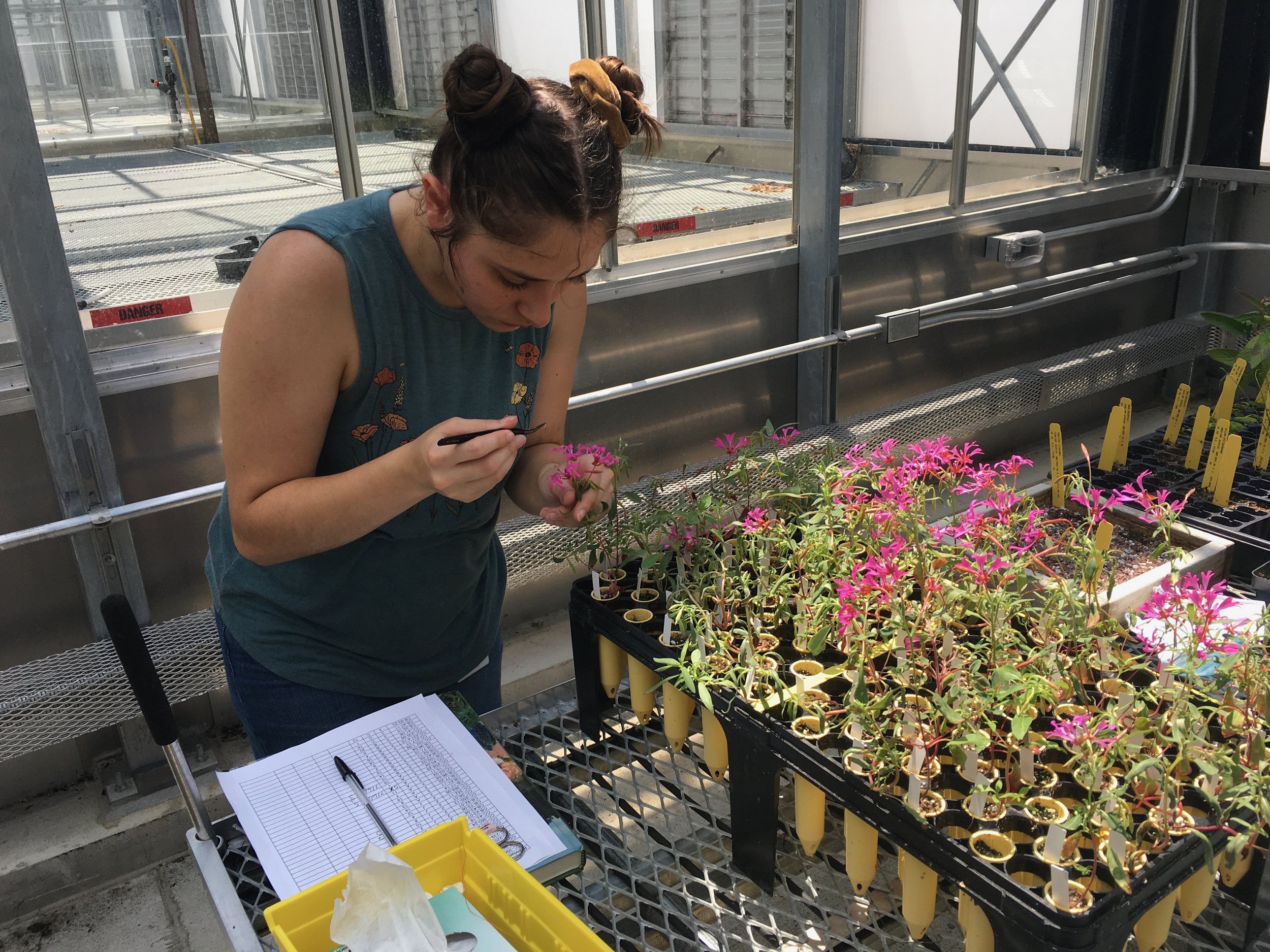
Undergraduate student collecting data on reproductive strategies in three taxa of Clarkia
Related publications:
Diaz-Martin Z, Cisternas-Fuentes A., Kay KM, Raguso RA, Skogen K, and JB Fant. (2023). Reproductive strategies and their consequences for divergence, gene flow, and genetic diversity in three taxa of Clarkia. Heredity. PDF.
Diaz-Martin Z, Browne L, Cabrera D**, Olivo J**, Karubian J. (2023). Impacts of flowering density on pollen dispersal and gametic diversity are scale dependent. The American Naturalist. 201(1): 52-63. PDF
Diaz-Martin Z, Karubian J. (2021). Forest cover at landscape scales increases male and female gametic diversity of palm seedlings. Molecular Ecology. 30:4353–4367. PDF